Measuring radon levels in a home or building is key to protecting the health of anyone breathing the air, but interpreting those levels is not quite as exact. As they say, everything is relative, and what is an acceptable radon level to one country or organization may differ from what is acceptable to another.
One thing remains certain: radon causes cancer. That alone should be reason to find out if you, or your family, is being exposed to excessive levels of the dangerous gas. In a recent online article, radon level measurement and acceptable levels were presented in an informative Q & A piece which is summarized and expanded upon here.

Radon levels are measured in units named for French scientists Pierre and Marie Curie, who discovered the radioactive element radium in 1898. Radioactive elements are unstable, always in a constant struggle, deciding whether to hold onto all of their atomic energy in the nucleus or release some of it. That « decay » of the nucleus releases radiation.

One curie is equal to the radioactivity of one gram of radium, which decays at 2.2 trillion disintegrations per minute. Sounds fast, doesn’t it? It also sounds small, right? Read on.
Picocuries per liter of air, or pCi/L, which is one of the preferred measurements for the speed of decay in radon, is equal to one trillionth of a curie, abbreviated as pCi. The pCi unit is used in the United States because it is required by federal law. Just about everywhere else that uses the metric system, including the World Health Organization, measures in Becquerels. It takes 37 Bq/m3 to equal 1 pCi/L.
The Becquerel unit, abbreviated Bq, is named after founder Henri Becquerel. The preferred radon level measurement unit is Becquerels per cubic meter, Bq/m3. One Becquerel equals one radioactive disintegration per second.

The best radon level measurement would be zero. Unfortunately, that’s not possible. The average global outdoor radon level varies between 5-15 Bq/m3,equal to 0.135-0.405 pCi/L. For every 99.9 Bq/m3, or every 2.7 pCI/L increase in radon exposure, lung cancer risk rises 16 percent. The thing to remember is that the lower the level, the lower the risk.
The World Health Organization states that the majority of lung cancers are caused by low to moderate radon concentrations due to the fact that a fewer number of people are exposed to very high indoor concentrations.
Depending on the country, acceptable radon levels vary. A generally accepted action level established by the World Health Organization, the WHO, is 100 Bq/m3, or 2.7 pCi/L. Homes or structures measuring higher are advised to take remedial action to lower radon levels. The WHO further advises an upper limit that should not be exceeded at 300 Bq/m3, or 8 pCi/L.
In the United States, the Environmental Protection Agency action level of 4 pCi/L is the standard, a bit higher than that of the WHO. It is estimated that two-thirds of all homes in the US exceed the recommended action level. It is also thought that reducing levels to sub-4.0 p/Ci would cut yearly cancer deaths from radon in half.
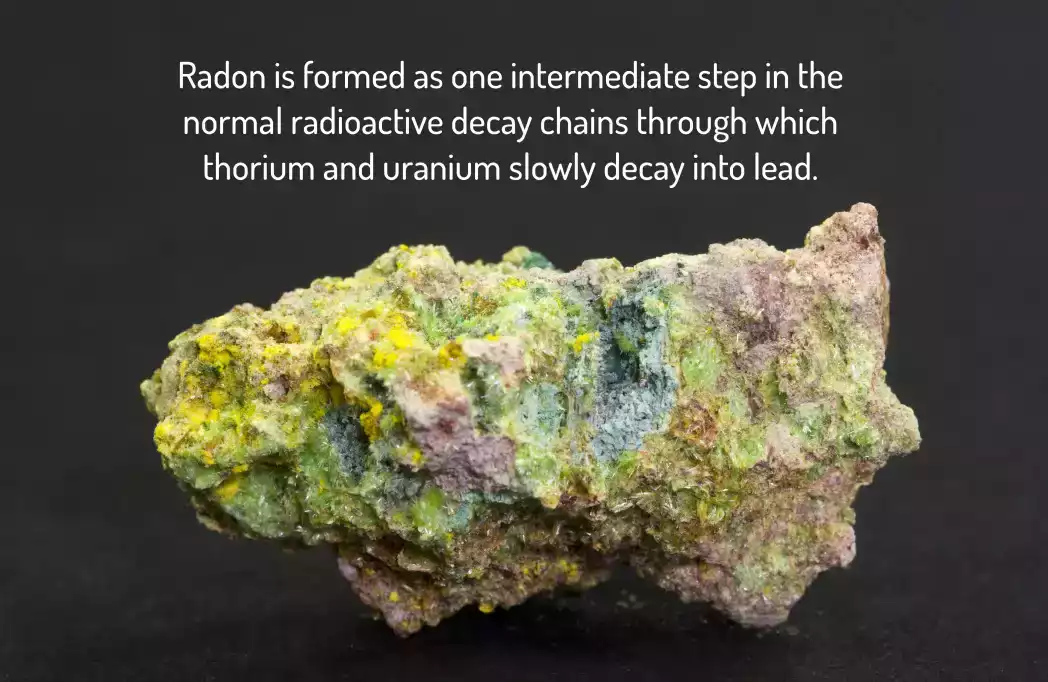
Radon gas occurs everywhere around the world. Escaping from the breakdown of uranium in igneous rock and underground water, radon gas seeps up to the earth’s surface. The gas is odorless, colorless, and tasteless, so it is difficult to detect.
Just walking around outdoors exposes everyone to low levels of radon gas, but mapping radon levels around the globe, it is clear that some countries have higher than average levels. As the map shows, places with high levels include Finland, Sweden, the Czech Republic, Luxembourg, Montenegro, Albania, and Mexico.
Just because you live outside of those areas does not mean that you are safe. High radon levels have been detected in every country, in just about every location on the planet. The only way to know for sure is through testing.
To measure your radon level, please research a radon detector.
Sources